
Experimental Testing Group
Experimental Testing Group
Mission
The mission of the Experimental Testing Group (ETG) is to implement the design methodologies of ASDL into physical components and systems for real-world testing and validation.
Functions
The ETG is focused on the full design process, manufacturing, and testing of subsystems and vehicles that operate across multiple domains including:
- Unmanned Underwater Vehicles (UUV)
- Unmanned Surface Vehicles (USV)
- Unmanned Aerial Vehicles (UAV), including both fixed wing and rotary wing and hybrid configurations
Activities
Design Build Fly
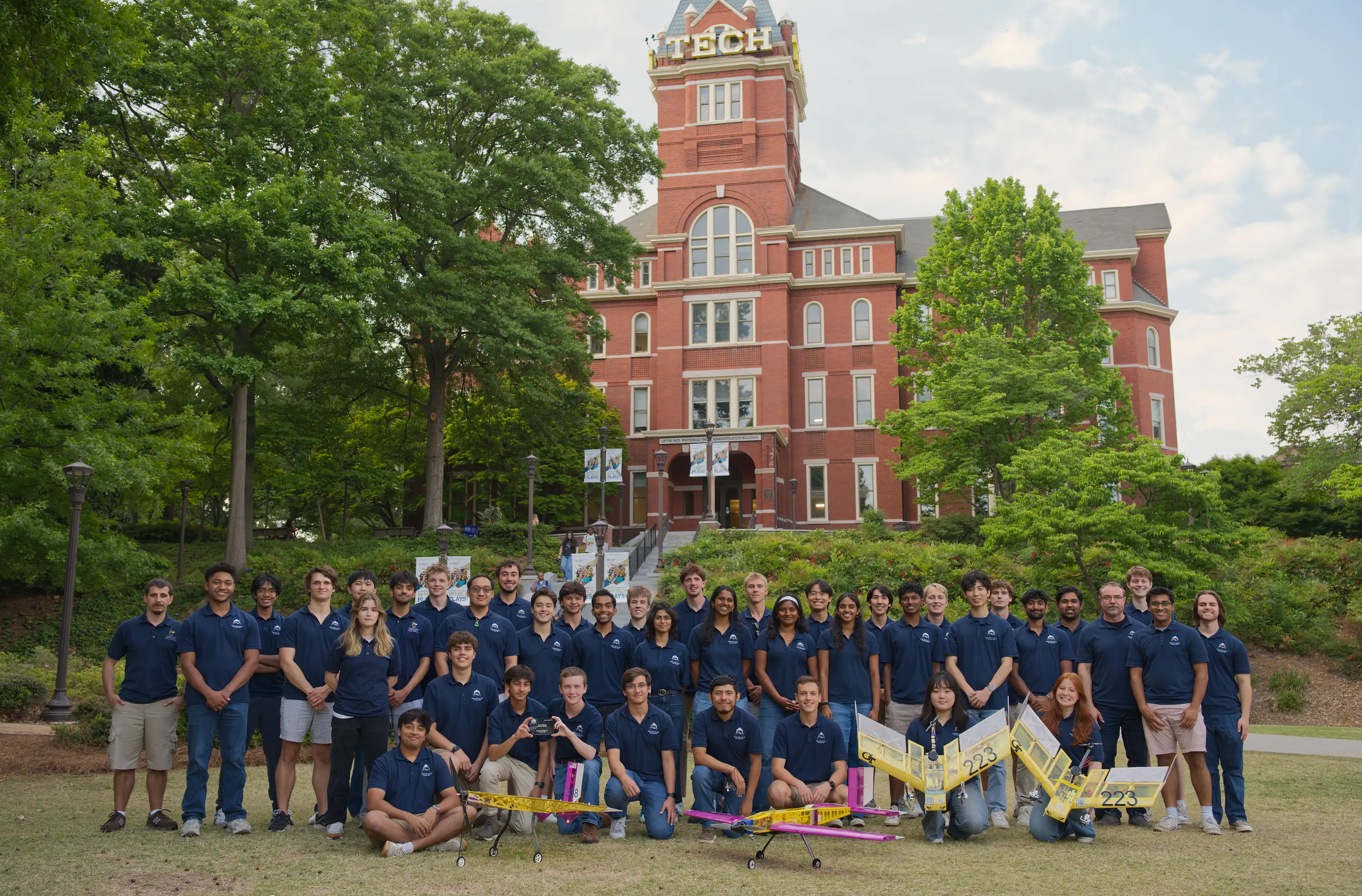
The fixed-wing competitions are put out by professional organizations, specifically the American Institute of Aeronautics and Astronautics (AIAA) and the Society of Automotive Engineers (SAE). AIAA organizes the Design-Build-Fly competition, which challenges students to design an aircraft from scratch that can perform certain missions that change every year. The SAE Aero Design competition has three vehicle classes: Micro, Regular, and Advanced. Georgia Tech competes in the Micro and Advanced classes. The rulesets for each class change on a three-year cycle. The Micro competition is typically a smaller, simpler ruleset, with the Advanced class being much more complex, with a focus on systems integration and sensors and autonomy. Read more here.
Marine Robotics Group
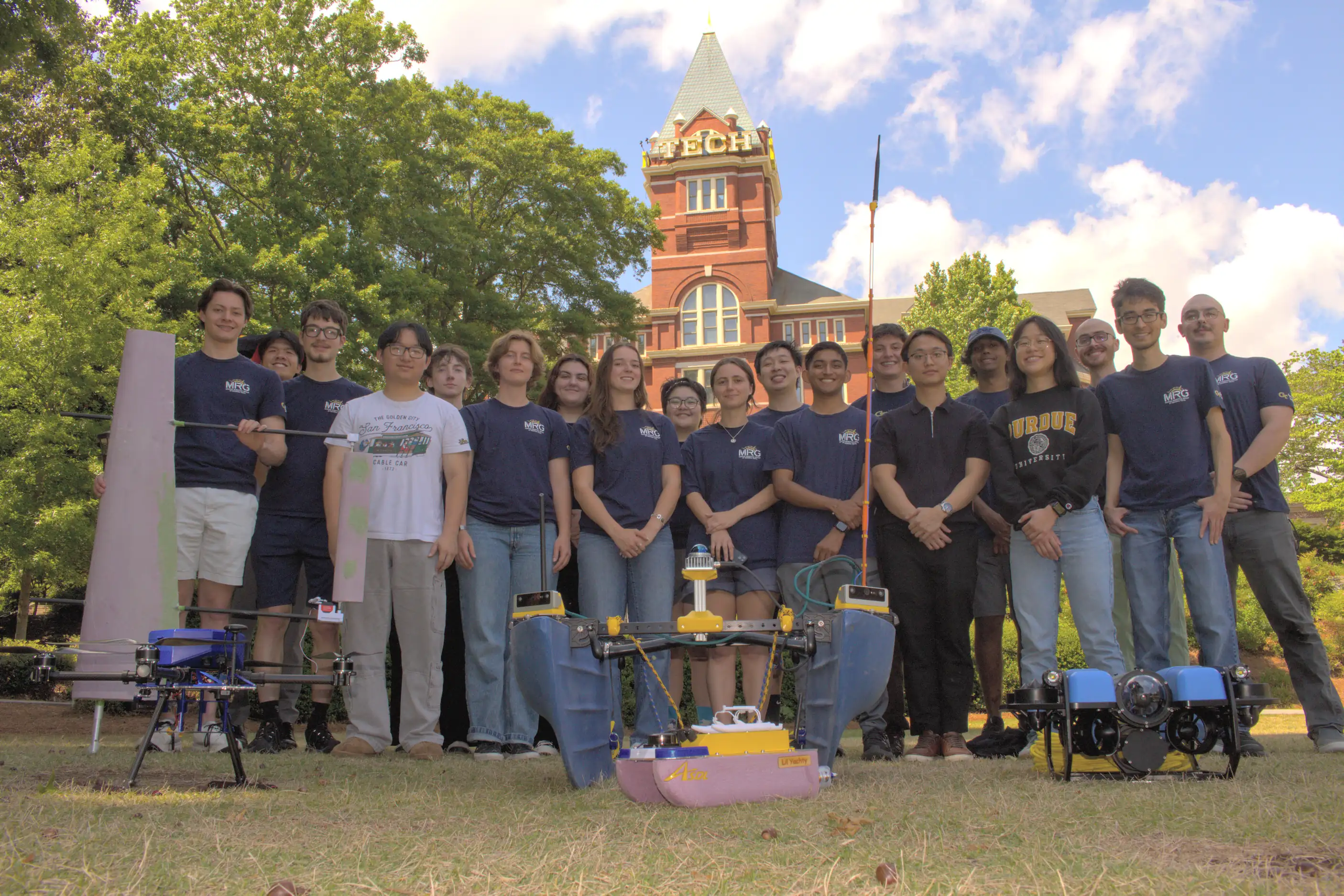
The Marine Robotics Group provides students with educational opportunities in robotics and autonomy across the underwater, surface, and aerial domains. Students design autonomous vehicles for a variety of competitions hosted by RoboNation, an educational non-profit sponsored by the Office of Naval research (ONR). Students develop an autonomous surface vehicle for the RoboBoat competition, an autonomous underwater vehicle for the RoboSub competition, and an advanced collaborative multi-domain system incorporating surface, underwater, and aerial vehicles for the RobotX Challenge. Read more here.
Research and Development
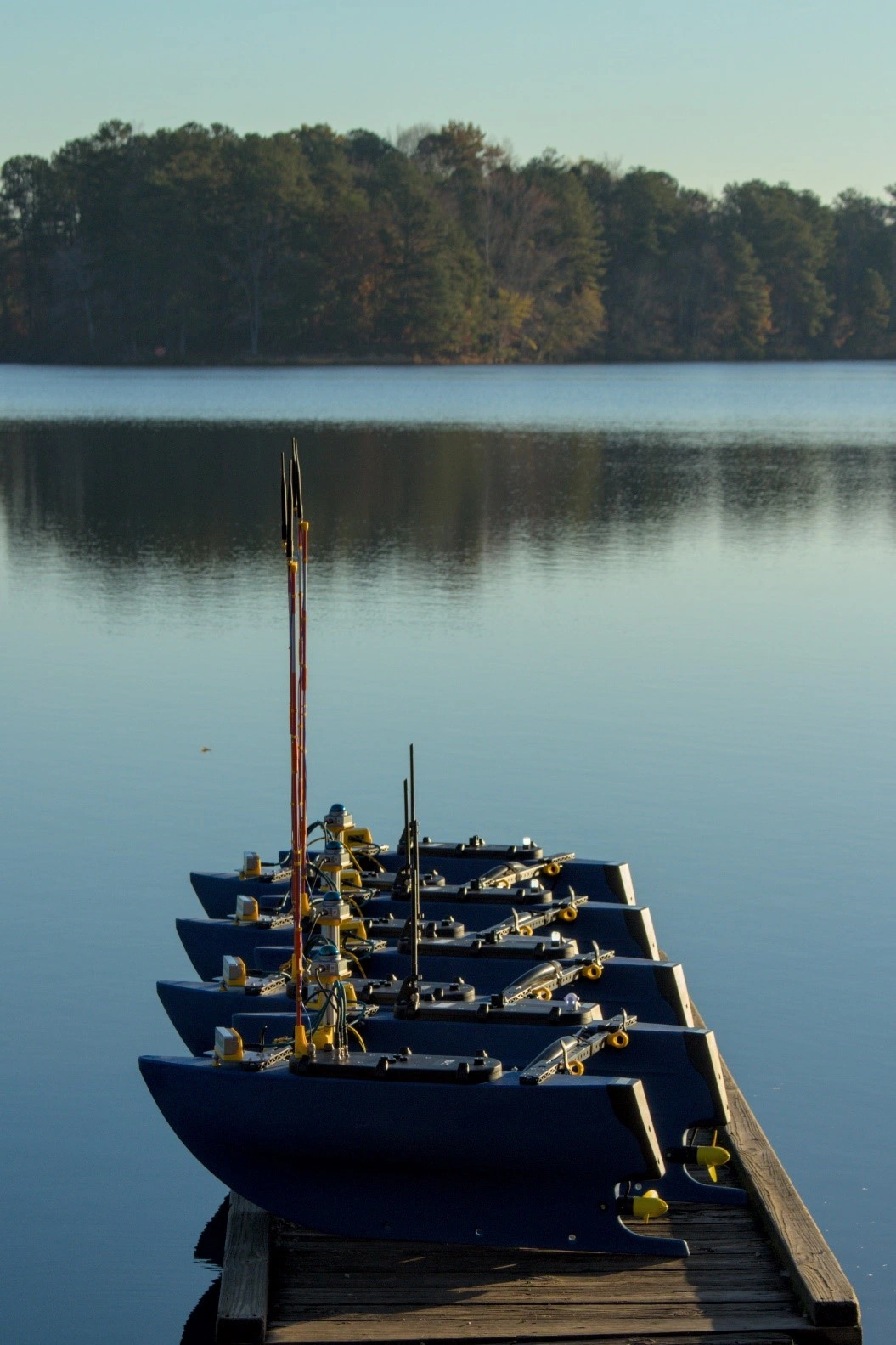
ASDL received a Defense University Instrumentation Program (DURIP) award from ONR in 2024 to advance the lab’s capabilities for autonomy research. The DURIP has enabled ASDL to purchase tools and equipment to enable future autonomous vehicle research beyond the competitions. This includes off-the-shelf surface and underwater vehicle platforms, drones, sensors, and tools like 3D printers and laser cutters.
The DURIP has enabled ASDL to upgrade its vehicle prototyping and integration facilities with state-of-the-art tooling, including a laser cutter, multi-material 3D printers, soldering benches. This critical infrastructure upgrade enables quick turnaround between digital design and physical deployment, providing immediate fabrication capabilities necessary to rapidly iterate on complex geometries, structural components, and custom embedded electronics.
The DURIP has also culminated in the development of the Unmanned Collaborative Research Testbed (UCRT), a reconfigurable collection of underwater, surface, and aerial vehicle platforms equipped with a suite of sensors of various modalities. This multi-domain research platform will enable cutting-edge research into robust autonomy and Physical AI, bridging the gap between computational intelligence and real-world, safety-critical field operations. By deploying adaptive algorithms directly onto physical assets in unpredictable marine and aerial environments, the UCRT serves as a vital proving ground for validating the next generation of autonomous systems.
Team
- Carl Johnson, ETG Director
PhD Students
- Sean Fish
- Thomas Devlin
- Jorge Ortiz Solano
- Aaron Wu
- Samuel Ibidapo
- Alice Chan